

Goal-Oriented Thinking
Effective leadership without defined goals is impossible. As a successful leader, you need to clearly communicate to your staff what your organisation’s shared goals are.
Strategy
To achieve your goals, you need a strategy. A clear and comprehensive strategy prevents the team from getting lost in unimportant details and helps it stay focused on the main goal.
At the Centre of the Network
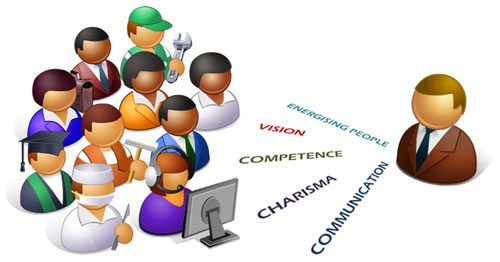
Strong leaders stand at the centre of organisations. They can interact with their entire environment – from staff to stakeholders. Through this interaction, you recognise needs and opportunities.
Influence
Successful leaders master the art of influence. They know whom to influence and how. Learning different influencing techniques for different people not only strengthens your authority but also increases your chances of success.
Motivation and Questioning Techniques
Motivation boosts enthusiasm, positive energy and productivity. Understanding your team’s vision helps you learn how to motivate it effectively. The right questioning techniques also help you get to the bottom of problems and promote efficient problem-solving.
Developing Staff
As a strong leader, you need to understand your staff’s perspective, skills and vision in order to get the best out of them. Remember: as a successful leader you are a role model and should live up to that role.
Leadership Styles
Some leaders have a single leadership style that works in some situations but not in others. Effective leaders, by contrast, appreciate the value of pragmatism and develop different leadership styles suited to changing environments. You will get to know different leadership styles and learn which style to use in which situation and with which people.
Delegation
Effective delegation not only gives a leader more time for more important tasks but also strengthens the team’s confidence in its own abilities. Learn the rules for effective delegation.
Creative Thinking
You will learn how to run a brainstorming session, encourage your team to be more creative, promote contributions and capture ideas and information.
Risk and Opportunity Management
As a leader, you need to identify risks early in order to manage them effectively and prevent future problems. Recognising opportunities in good time allows you to make the most of situations.
Action Plan
At the end of this course, you will draw up an action plan to improve your leadership skills.