From Analogue to Digital
The Technical Aspects
The (Virtual) Trainer
Before – During – After
Possible Concerns
How to deal with problems

In this introductory training on Google Workspace you will gain user skills for Gmail, Google Calendar, Hangouts and Google Drive.

This course is aimed at people who want to develop their ability to coach employees towards higher performance.
The accelerated Lean Six Sigma Green Belt programme and its methodology enable participants to meet the certification requirements faster than with conventional Six Sigma and Lean training programmes

Microsoft Power Automate (formerly Flow) offers automation solutions that let you efficiently integrate and automate external services and processes in SharePoint or Office 365. No programming skills of your own are needed – the work is done in templates and via drag & drop. In this training you will learn the functions, applications and possible uses of Microsoft Power Automate.

This course offers an instructor-led product walkthrough of Power Automate (formerly Microsoft Flow) – from start to finish, engaging and practical. Power Automate is a versatile product that turns business processes into automated, consistent and visual workflows. Power Automate is designed to connect the various products in Office 365 with each other and to establish connections to other on-premises and web-based solutions. This course gives you the confidence to choose the right actions and the right workflow logic for your business workflows.

This seminar is aimed at administrators who are interested in Microsoft Teams in general or who want to prepare for the "Microsoft Teams Administrator Associate" certification exam.

The bootcamp covers the administration of Windows Server on-premises, in Azure and in hybrid environments: AD DS, remote management with Windows Admin Center, PowerShell and Azure Arc, Hyper-V and Azure VMs, DNS and DHCP, storage and file services, security hardening as well as monitoring and troubleshooting. The structure follows the AZ-802 «Administering Windows Server» exam, which leads to the «Microsoft Certified: Windows Server Administrator Associate» certification. AZ-802 replaces the AZ-800 and AZ-801 exams, which Microsoft will retire on 30 September 2026.
This course prepares you for the LPI 201 and LPI 202 exams. The topics of this course are planning, implementing, maintaining and troubleshooting a small mixed network (MS, Linux). Among other things, you will cover: advanced Linux kernel topics, LAN server (Samba), filesystems, RAID and LVM. The topics of this course are planning, implementing, maintaining and troubleshooting a small mixed network (MS, Linux) as well as LAN server (Samba), internet gateway (firewall, proxy, mail, news) and internet server (web server, FTP server).

The aim of the LPIC certification is to let Linux administrators demonstrate both their practical and theoretical Linux knowledge. Besides thorough preparation of the exam material, independently gained experience and practice working with Linux is therefore an important ingredient for LPIC success.
Successful project management requires effective planning and adherence to industry best practices at every step of the process. Once you understand the fundamentals of project management, you will be better prepared to initiate a project in your organisation and set it up for success. In this course, you identify effective project management practices and their associated processes. NOTE: You will earn 7 PDUs with this course.
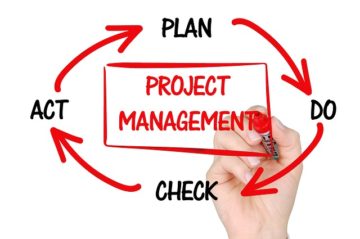
CAPM is the entry-level certification of the Project Management Institute (PMI) for anyone who wants to learn project management thoroughly. The course follows the current CAPM examination content with four domains: fundamentals and core concepts, predictive plan-based approaches, agile frameworks and business analysis. The course prepares you for the Certified Associate in Project Management (CAPM) exam.

PMP is the certification of the Project Management Institute (PMI) for experienced project managers. The course follows the Examination Content Outline introduced in July 2026, covering the domains People, Process and Business Environment, and takes predictive, agile and hybrid approaches into account. The course prepares you for the PMP exam (the «Project Management Professional» certification).
This two-day course is aimed at SharePoint users as well as team and project leaders who already have basic experience working with Microsoft SharePoint and who want to use this course to learn advanced key user or power user knowledge and skills for their teamwork.
With PowerPivot, Business Intelligence reports that previously had to be commissioned can now be created independently. This course shows you how.

With the rise of cloud computing and cloud storage, the era of «Big Data» has begun. Thanks to the abundance of computing power and storage, organisations and employees with very different roles and responsibilities can benefit from data analysis to gain timely insights and achieve competitive advantages. Data-driven visualisations let everyone explore, analyse and report on insights and trends from data. The Tableau® software is designed exactly for this purpose. Tableau was developed to connect to a wide variety of data sources and enables users to quickly create visualisations of connected data in order to gain insights, reveal trends and create reports. Beyond the basic capabilities of creating data-driven visualisations, users can use Tableau to manipulate data with calculations to surface insights, make visualisations interactive and perform statistical analysis. This allows users to create data-driven insights and share them with colleagues, executives and customers.

The era of "Big Data" has seen enormous growth thanks to the rise of cloud computing. It provides computing power and storage in abundance, allowing organisations of all kinds to capture and store data. Anyone who uses this data effectively can gain timely insights and competitive advantages. This course introduces you to Tableau. Tableau was designed to connect to a wide variety of data sources and enables users to quickly create visualisations of connected data in order to gain insights, reveal trends and create reports. You will learn about Tableau's data connection capabilities and visualisation features, which go far beyond what spreadsheets offer. This allows you to create compelling, interactive worksheets, dashboards and stories that bring your data to life and enable you to take well-considered action.
After a fundamental and detailed introduction to the SAP system, this training gives you the system's integrated business approach as well as a comprehensive understanding of the system. You also get an overview of the modules Procurement/Materials Management (MM), Sales (SD), Warehouse Management (LE-WM), Financial Accounting (FI), Controlling (CO) and Human Resources (HCM), so that you can work competently and independently in these modules. A high proportion of hands-on exercises, supported by an experienced trainer, deepens the knowledge you have acquired.

In our fundamentals course – SAP Accounting, you get a compact introduction to 2 core areas of every company. At the start of the course, the SAP01 course introduces you to the SAP system and gives you an overview of the many ways the SAP system can be used. With the AC010 and AC040 courses, you work on the two main modules from the areas of accounting and bookkeeping. You are taught the fundamental processes and shown how they are embedded organisationally within the overall company structure. In addition, a large number of hands-on exercises give you a high degree of confidence as a user. The SAP – Fundamentals course is good preparation for a position in finance and gives you confidence in these complex subject areas.
Root cause analysis is a group of methods from the field of quality management and quality control. As the complexity of systems, processes and manufacturing has increased over the years, it has become necessary for employees to analyse problems efficiently and find key errors in a given system. Root cause analysis (RCA) offers a range of tools that make this process easier.

In this course, participants learn about the new features of Office 365 / 2019 / 2021. Through exercises, they become familiar with the new interface and the new functions in order to achieve greater efficiency in their daily work with Office 365 / 2019 / 2021.

This course covers the theoretical and technical aspects of using Python in applied data science projects and in data logistics use cases.
In this course, you learn the fundamentals of programming in Python and develop applications that demonstrate your understanding of the language.
A practical Python training course for beginners and beyond that takes participants from the basics of writing and running Python scripts through to more advanced features.
The advanced course for anyone who already uses PL/SQL and now wants to develop more cleanly, securely and quickly. The focus is on packages and program structure, bulk processing, dynamic SQL, compound triggers, LOBs and JSON – plus an extensive block on performance: compiler optimisation, Result Cache, profiling with DBMS_HPROF and PL/Scope. On top of that, the new capabilities of Oracle AI Database 26ai (formerly 23ai) from a developer's perspective: duality views, vectors and SQL Firewall.

PL/SQL is the Oracle database's programming language – and the way to build logic that runs right where the data lives. Over five days you build blocks, cursors, procedures, functions, packages and triggers, and learn to catch errors cleanly. The course works on the current Oracle AI Database 26ai (formerly Oracle Database 23ai) and prepares you for exam 1Z0-149 «Oracle Database Program with PL/SQL» – Oracle's only current PL/SQL certification.
An introduction to SQL on the Oracle database – from your first query to subqueries, joins and creating your own objects. The course works on the current Oracle AI Database 26ai, which emerged from Oracle Database 23ai in October 2025 and has also been available as an on-premises version for Linux since January 2026. Alongside classic SQL craft, you get to know the platform's new capabilities: JSON, property graphs and AI Vector Search directly in SQL. The course prepares you for the Oracle AI Database SQL Associate certification (exam 1Z0-171).
The advanced course for production operations: patching and upgrading, multitenant in depth, backup and recovery strategies with RMAN and Flashback, performance diagnostics with AWR, ADDM and Active Session History, SQL and optimizer tuning, and memory management and In-Memory. Plus what's new in Oracle AI Database 26ai from an operations perspective. Oracle now bundles these topics in the learning path for the Oracle AI Database Administration Professional certification (exam 1Z0-183) – this course covers them compactly in one week.
The foundation administration course on the current Oracle AI Database 26ai release. You get to know the architecture, create databases, operate instances, configure Oracle Net, work with the multitenant architecture, manage storage, users and privileges, load and transport data, and get an introduction to monitoring and performance. New compared to the 19c world: AI Vector Search, JSON Duality Views, SQL Firewall and True Cache from an administration perspective. The course prepares you for the Oracle AI Database Administration Associate certification (exam 1Z0-182).
Microsoft Access is a relational database application that gives you control over large volumes of data.
In this seminar, participants deepen their skills in working with Access. After the seminar, they will be able to design linked tables and create complex forms and reports.